Short Sad Stories
Play Short Sad Stories
Short Sad Stories Screenshots


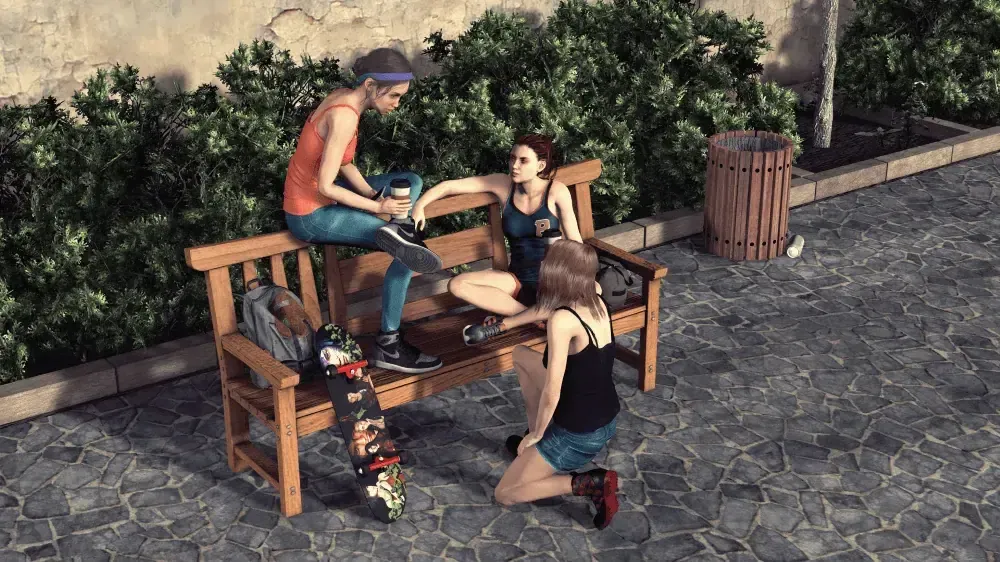
Short Sad Stories review
Explore the unique blend of storytelling and player choice in Short Sad Stories
Short Sad Stories is an interactive game that captivates players by combining emotionally charged storytelling with meaningful player choices. This game stands out for its ability to evoke deep feelings through its narrative while allowing players to influence the story’s direction. If you’re curious about how Short Sad Stories delivers a unique gaming experience that blends sadness, storytelling, and interaction, this article will guide you through its core elements and what makes it compelling.
Understanding Short Sad Stories: Gameplay and Narrative
You’ve probably played games where you save the world, defeat the final boss, and ride off into the sunset. 🎮 But what about a game where the goal isn’t to win, but to feel? To sit with a quiet, powerful emotion and see a story through to its natural, often bittersweet, conclusion? That’s the space the Short Sad Stories game occupies, and it’s an experience that stays with you long after you put it down.
This isn’t just about reading a sad tale; it’s about living it. The core magic of this emotional narrative game is its commitment to interactive storytelling. You’re not a passive observer—you’re an active participant, making decisions that gently tug the narrative thread in different directions. The result is a profoundly personal journey where the player choices impact is felt in the weight of the silence between lines and the outcome of a fragile relationship.
### What Makes Short Sad Stories Unique? 🤔
At first glance, you might think, “It’s a collection of sad short stories.” But to stop there would be to miss the point entirely. The uniqueness of the Short Sad Stories game lies in its elegant fusion of literature and interactive design. It strips away complex mechanics, sprawling worlds, and skill trees, focusing purely on the story-driven gameplay.
Think of it like this: you’re handed a beautifully crafted, but incomplete, novella. On certain pages, the narrative pauses and presents you with a seemingly simple choice. Do you tell your ailing friend the hard truth or a comforting lie? Do you keep a memento or let it go? These aren’t “good vs. evil” decisions. They’re human ones—fraught with nuance and emotional consequence. The game’s environment, music, and minimalist art style all serve this singular purpose: to immerse you in a mood and make your choices feel significant. It’s an emotional narrative game that values your emotional intelligence over your reflexes.
My first time playing, I spent nearly ten minutes on a single choice—whether to open a character’s old journal. The game doesn’t rush you. It gives you space to think, to feel what might be on those pages, making the eventual decision entirely your own.
### How Player Choices Shape the Story ✍️
This is where the heart of the experience beats. The player choices impact in Short Sad Stories is subtle yet profound. The game rarely shouts, “THIS IS A BIG DECISION!” Instead, your inputs feel like natural moments of introspection that the character might have. Yet, these moments collectively determine the path you walk and the emotional residue you’re left with.
The branching isn’t about unlocking “good” or “bad” endings in a traditional sense. It’s about exploring different facets of the same emotional truth. One path might lead to an ending of quiet acceptance, while another might culminate in unresolved longing. The game endings are less about success or failure and more about emotional completion—each one valid, each one offering a different perspective on the central theme.
Example: How Player Choices Affect the Story Outcome
Let me share an experience from a story about two friends drifting apart. Early on, you choose how to respond to a late-night message: with warmth or with distance. Later, when one friend is facing a crisis, your previous choice determines if you even hear about it. In my playthrough, my earlier detachment meant I only discovered the crisis through a mutual acquaintance, leading to an ending filled with regret and “what ifs.” On a second try, a warmer approach opened up a vulnerable conversation, resulting in a sad, but cathartic, reconciliation. The core sadness of drifting apart was constant, but my player choices impact dictated whether it ended with a period or a question mark.
| Your Key Choice | Narrative Pathway | Emotional Outcome |
|---|---|---|
| Encourage a character to pursue a forgotten dream | Unlocks scenes of creative passion and renewed purpose | Ending tinged with hopeful melancholy |
| Advise them to be “practical” and let it go | Story focuses on routine and quiet resignation | Ending of deeper regret and subdued longing |
### Emotional Themes Explored in the Game 😢
The Short Sad Stories game doesn’t use sadness as a cheap trick. It explores it as a spectrum, a fundamental part of the human experience. The emotional themes in games like this are handled with a maturity and respect that is all too rare.
- Loss and Grief: This isn’t always about death. It can be the loss of a relationship, a missed opportunity, or the fading of one’s own youth. The game allows you to sit with these feelings, to navigate the awkward, non-linear process of grieving something intangible.
- Regret and Nostalgia: Many stories are mirrors held up to the past. You’ll explore memories and make choices that directly confront the “if only” moments of life. The interactive storytelling makes this intensely personal—you are actively shaping what the character regrets or comes to peace with.
- Melancholy and Transience: There’s a beautiful, pervasive theme about the fleeting nature of moments and relationships. The game captures that soft, blue feeling of knowing something beautiful is temporary, encouraging you to find meaning within that impermanence.
These emotional themes in games are not just backdrops; they are the very fabric of the story-driven gameplay. Every click, every choice, is a way to engage with these themes directly. You aren’t just told a character is lonely; you make the choices that either deepen their isolation or offer a glimmer of connection.
Ultimately, the Short Sad Stories game is for the player who views games as more than a pastime. It’s for those who seek a meaningful, reflective experience where the stakes are emotional, not digital. It proves that in interactive storytelling, the most powerful journey isn’t across a map, but into the heart of a feeling. And in doing so, it creates a unique, unforgettable space where your choices matter not because they change the world, but because they change how you feel about the story you helped tell. 🌌
Short Sad Stories offers a compelling blend of interactive gameplay and emotionally rich storytelling that resonates deeply with players. By allowing choices to shape the narrative, it creates a personalized experience that explores themes of sadness and reflection. Whether you’re drawn to narrative-driven games or looking for a unique emotional journey, Short Sad Stories stands out as an engaging title worth exploring. Dive into the game to experience firsthand how your decisions influence the story’s path and emotional impact.